The Stuff of Life

The Stuff of Life
For those of us who find nature to be both aesthetically beautiful and life-sustaining.

Tuesday, July 8, 2014

A History of Survival and Preparedness


Prepping is a term used to describe a variety of lifestyles. For the vast majority of people, the term is thought to describe an individual or group of individuals who recognize the risk of catastrophe, calamity and uncertainty and thus attempt to prepare for these uncertain times so as to be better equipped mentally, physically and tangibly to survive any situation presented. Preppers value being able to take care of themselves no matter what. They value not relying on the government or other agencies for their survival needs. They know and recognize the need to plan ahead to meet their own and their loved ones basic needs no matter whether the event is small or large scale.

Prepping Through Time:

Historically, prepping has been around for a long while. Our ancestors were adept at planning ahead for times when things might be more grim. They were nomadic in nature and survived and thrived by planning ahead for more difficult times. Only recently has the term "prepper" been used so widely. There were a variety of preppers spawned from historical uncertainty as with the Great Depression after the stock market crashed in 1929 and the Cold War era leading up to 1980. Many feared a nuclear attack and began stock piling preps and building shelters just in case.  Y2K and the widespread fear of electronic collapse also gave way to prepping for the unpredictably of the future. Following the events of the Great Depression, a lot of people no longer trusted the government or banks or anyone else with their safety and security. Lifestyle changes came about from having experienced a time of loss of prosperity and going without. From this period, a great amount of us had relatives or grandparents who salvaged and saved every spare piece of tin foil, butter containers, rubber bands and other odds and ends for that "just in case" time when they might need it and not be able to get it.

This Great Depression was, in essence, the spawn of the prepper mindset: A mindset and worldview that states that I might not always have access to food, water and medical care. I might have to find a way to take care of myself and my family. I might not always be able to count on others. I am going to plan ahead. I am going to save this tin foil and other items because I have had to go without and I learned a valuable lesson from that experience.

Modern Prepping:

Fast forward to our modern inter-connected, wired, heavily migrated and immigrated world and everything is far more complicated on a much grander scale. We know that today these uncertain events can become globally catastrophic. We also know that due to our higher population levels that our job markets are much more strained. We know that we could lose our job. We know that a pandemic could spread far more rapidly and globally than what the CDC (Centers For Disease Control) or WHO (World Health Organization) could compensate for and keep up with.

From the vast amount of internet, radio and television programming, we know that weather causes major catastrophic events all around the world. Now, more than ever before, we can watch war, hurricanes, kidnappings, terrorism, pandemics, economic challenges and international relations from our own living rooms. The world has always been a dynamic and potentially dangerous place, but now we really can't pretend that it cannot or will not affect us anymore. We would have to disengage from all types of media to include the newspaper in order to really tell ourselves that nothing bad could ever happen to us.
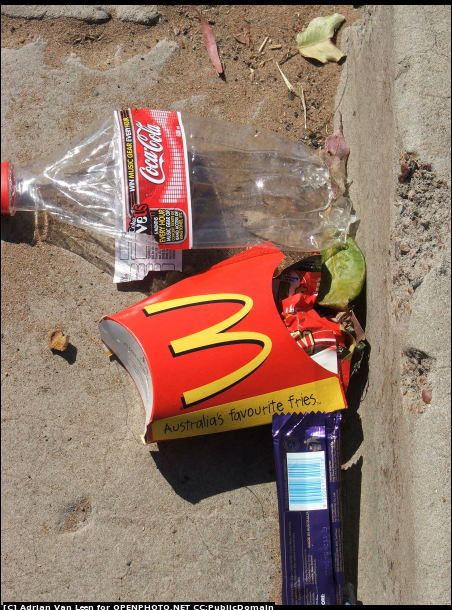

Prepping Awareness What Happens When McDonald's, Coke and Snickers Are Not Available:

This awareness is a catalyst for the rise of the prepper. Being prepared is now far more mainstream and acceptable. It is much more difficult to look at someone who believes in the value of having life-saving skills and supplies on hand and not question whether maybe we should do this too. To ignore the importance of prepping is to say that you actually believe that nothing bad will happen to you and if it does, someone else will take care of you. No one wants to verbalize that out loud. They know deep down that they should actively do what they can to be prepared. There is undoubtedly a sense of shame in admitting that you are ill prepared to take care of yourself or your family should you need to.

Following the sinking of the Titanic, no one wants to be on a cruise ship that doesn't have enough life rafts for everyone. Likewise, knowing the possibilities of things that could occur, no one should want to face severe weather, job loss or catastrophe without food, water and supplies. It just makes rational sense to do a risk analysis and contingency planning in order to be prepared for those risks. It's "just in case" insurance. We all should value the feeling of being prepared.

Preppers are no longer being viewed as paranoid or strange. They are slowly and surely being viewed as role models for the rest. They are actively showing and teaching others the value in having skills, knowledge and supplies to take care of yourself during uncertain times. The more and more that preppers share online or in writings or with other media and groups, the more mainstream this lifestyle and mindset becomes.

There has rarely been a time in history that was calm, smooth sailing with little to no worries, but now, more than ever our future is uncertain. Now, more than ever, we are made aware of this uncertainty. Now, more than ever we need to be planning ahead. Now, more than ever, prepping is gaining in popularity for a very good reason.

Monday, July 7, 2014

Empower Yourself to Get Through Your Current Situation


Approaching a problem with a beginner’s mind will allow even the most experienced to view the surroundings with an open mind. Opening up your mind to all of the possibilities your surroundings offer will only increase and improve your odds of survival. With the mind of a novice everything has possibilities and you are only limited by your own imagination.

 All of us approach our physical and social worlds with mental models that are a compilation of our past experiences, our internal values and judgments and our own mental roadblocks that are put in place over years of disappointments, successes and failures. But, by purposefully stepping out of this box we have put ourselves into and viewing everything with a new, untainted perspective, we open up a world of new options.

 This mental practice, when put to use in practicing survival skills, enables you to be more innovative and increase your ability to expand your potential options when presented with a situation. We tend toward the same responses when problem solving that we have always relied upon. To approach a problem with a novice mindset takes practice in and of itself. Once you have mastered this ability, however, you will be amazed at how much creative energy is allowed to surface that we typically cut off with boundaries and mental roadblocks.

 An open mind that is wide-open to possibilities will far sooner be able to recognize any opportunity than a closed, jaded, know-it-all mind. Do not allow your own brain to keep you from seeing things with a new perspective. Remember what it was like to practice your skills when you had never seen it done before. Teach a child how to do a skill and you will see an open mind in practice. They have no preconceived ideas of what the outcome will be and are therefore much more open to problem solving and seeing opportunities wherever they may be. Children see everything as possible and this is the mindset that you want to hone in on. As adults we slowly narrow our options until we are confined by our own lack of daring creativity.

 Problem solving in survival situations or real-world, day-to-day circumstances is a skill that not everyone is great at. You can improve this ability via learning how to put down your everyday lens that you use to view the world and pick up a lens that has not been used yet. Mentally pretend that you are viewing the problem with this unused lens. Everything about the problem should look different with this new lens. Consider all of your options and all of the possibilities utilizing whatever you have on in terms of every-day-carry items, what is in your immediate surroundings and what is perhaps beyond your immediate surroundings. Attempt to problem solve your way around the problem with new eyes and see if more solutions don’t come to mind.

 In every-day life many of us get caught up in patterns and routines. Because of these patterns and routines, we become “stuck” or unable to get ourselves out of a situation that we no longer want to be in or that is painful to be in. Why is it that some people always land on their feet while others struggle with the same sort of problems over and over again? Because of these mental models and routines some people are virtually unable to see a new solution. Therefore, they continue to respond to problems with the same set of solutions expecting different outcomes each time and never really grasping that they will continue to get the same sort of outcome if they continue to respond to problems with the same set of solutions.
Taking a chance on "you" can be frightening. Sometimes we are blocked by an inability to see the potential in ourselves. Opening up your mind to possibilities and practicing looking at solutions without stopping yourself with a lack of belief in yourself can be difficult. Explore your world, explore your options, explore change and explore these options with a free and open mind as if you were a child again. Remember when you thought you could be an astronaut? Remember when you believed 100% that you would be a race-car driver? What happened to you between those dreams and your current set of circumstances? You got in your own way. You kept yourself from being able to believe that you would ever be able to do those things. And, so you continued on the path of least resistance a.k.a. “the easier path.” When looking at solutions to survival situations and having a survival mindset, it is vital that you do not get in your own way.

You have to believe in yourself. You must believe that you can get out of the situation. You need to accept that although it may be one of the most difficult things you have ever been through, you can and you will survive. You must have the will to survive. You cannot afford to have a lack of faith in your own ability and you cannot afford to be closed-minded to the survival options you are presented. To have the ability to see the entire situation for what it is and explore what your options may be without thinking of all of the reasons that you don’t have what it takes to succeed is the point of practicing a survival mindset. 

You do have the capacity to problem-solve and to explore options and utilize your experience to best meet your needs and survive another day. You can do this now, in your current life. You can practice looking at your situation for the first time with a new set of eyes and exploring all of your options not just the options that you immediately think of. Not just the options that you usually give yourself….but, all of the options. Use your new lens. Use the lens of a novice.

 How would someone who hasn’t lived your life, hasn’t experienced what you have experienced and hasn’t made all of the choices or suffered all of the consequences of those choices view your life? Would they offer new insights? Would they see new solutions? Most certainly they would. We are only limited by our own lens and our own borders. Expand those borders in your current world. View everything with a new untainted lens and see how different everything looks. An open-mind creates a world of new opportunity for which we were unable to see before.

 This is not to say that you should foolishly go out into any new situation with only an open mind and everything will work out. This is one more skill to add to your survival pack. An open-mind that allows you to see all possibilities will most certainly open up a new world of options, solutions and improve your survival mindset.

Wednesday, July 2, 2014

Train Your Brain First For Emergency Preparedness


Some people under intense stress and pressure close down and are unable to think coherently or make rational decisions. Whereas, others are able to recognize the level of danger and still make survival decisions. And then there are those who are unable to fully grasp the profoundness of an emergency situation and may not take the events or their corresponding decisions seriously enough until it is too late.

Why is that? I have been fascinated by this fact since I was a child and found myself in a life or death situation. I, along with a friend, were in a life-changing moment in time that terrified both of us. I made rapid decisions and choices under the extreme stress, while she froze in a completely unresponsive manner. We were both from similar backgrounds, both the same age, the same sex, with similar likes and dislikes. Why did my flight or fight mechanisms kick in so well and her's not at all? 


Fast forward, years later, and I have gleaned a great deal of insight into the survival personality. The personality type that recognizes the seriousness and the gravity of the situation, but refuses to accept defeat, refuses to buy into hopelessness and will do "something" whatever that "something" is in order to save one's own life.

This life-saving ability may be innate in a manner that one either has it or doesn't. But, that never made sense to me because it fails to explain the years and years that humans have adapted to their environments and survived and thrived among dangers, predators and each other. There is a historical learning curve that has taken place in order for you or I to even be here. If our ancestors had not adapted and developed the ability to function under stressful circumstances and make quick, potentially life-saving, decisions, we simply wouldn't be here as they wouldn't have survived to reproduce. 

These ancient survival clues that are unearthed as we learn more and more about where we came from, are insight into our modern potential and capabilities. To me, this clarifies that the survival personality can be honed. We may not need these survival abilities anymore, on the day-to-day as we once did, but perhaps they are buried deep within us under a pile of tablets, laptops, game consoles and cell phones.  

The ability to move toward action rather than inaction and the ability to get yourself out of trouble and to make life-saving decisions are abilities that are still within each of us. These abilities are gifts, bestowed upon us from the blood, sweat and tears of the many that came before us. The fact is that the human plight has been a painstakingly difficult one. We are the ultimate survivors.

We survive without actual flight, without long, sharp claws and without 6-inch canine teeth. We survive because we systematically adapted to our environment, mastered fire-craft, shelters and tool-making and responded appropriately to threats and dangers.


So, how does one hone this innate survival ability?


We hone this skill like any other life saving skill via knowledge and mental practice. Mentally practicing these skills enables you to consistently consider every angle of a "potentially dangerous situation." Law enforcement officers benefit from mental preparation in the same way that you can too. You have to imaging scenarios you might encounter. You could also mentally imagine your current situation. Then, you have to imagine surviving it. What would that look like? You are readying yourself to recast those odds in your own favor should you encounter them. These skills increase your own capacity to make decisions under duress, stress and danger, by gently and systematically exposing your brain to "what-if" scenarios and responding to those "what-if" scenarios with knowledge, skill and a plan. You are improving your brain's pathways and responses by mental mapping and successful visual navigation. 

When I look back on my own situation, the primary difference between myself and my friend is that I had been preparing throughout my childhood for survival situations, but I never actually realized it until adulthood. The fact that I was introduced to wilderness survival techniques and situations in a timely, fun manner, literally saved my life when the SHTF in a real-life scenario. It wasn't so much the skill, although skill is precious in saving lives. It was the empowerment and the mental preparation that I had done on my own through practicing these skills that ultimately saved my life. I had been developing a survival mindset. 

If you can envision it, you can create it. The mind is powerful. Fuel your mind with knowledge and skill that will not only aid you in life-threatening circumstances, but will aid your mind in recognizing the gravity of the situation and responding to the situation. You can train your brain to be a survivor. Your life is precious. Train your brain to be there for you if you ever need to save a very important life....your own.